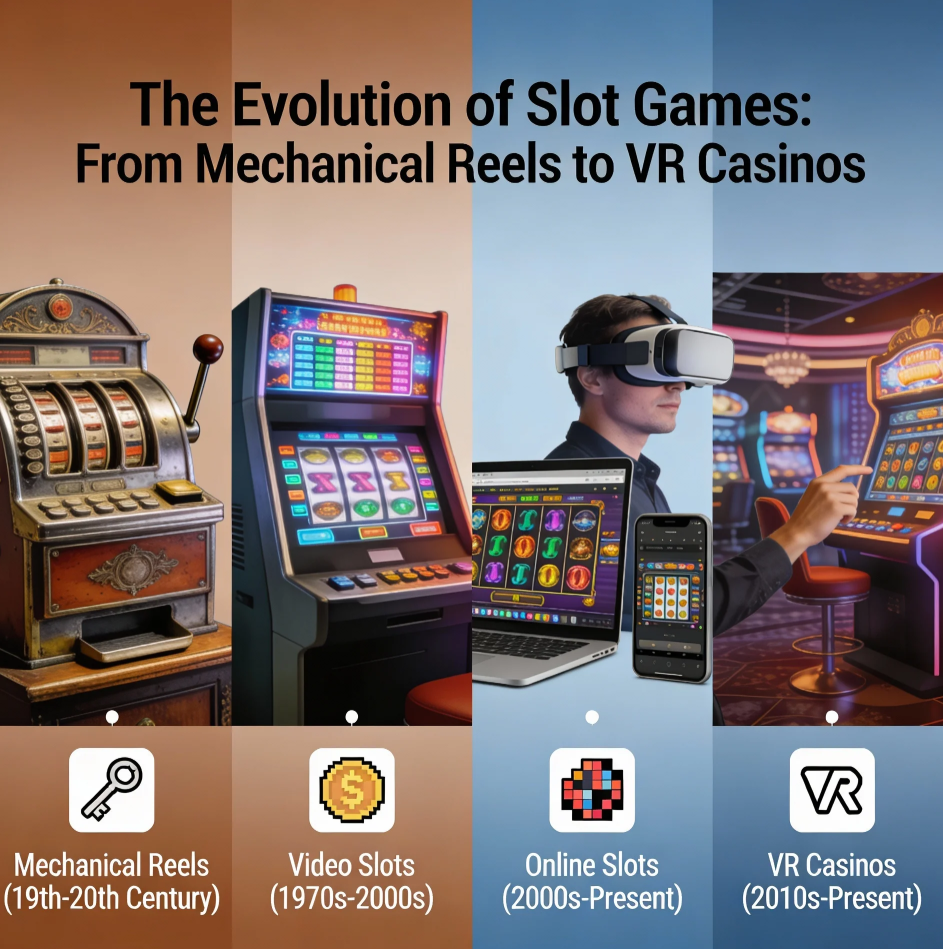
Slot games have come a long way since their humble beginnings in the late 19th century. What started as a mechanical pastime has evolved into a high-tech entertainment experience that now spans online platforms, mobile apps, and virtual reality casinos.
Understanding the evolution of slot games reveals not only technological progress but also shifts in player expectations and gaming culture.
The Birth of Mechanical Slots
The first slot machine, created in 1895 by Charles Fey, featured three mechanical reels and a simple payout system. These early machines were straightforward:
- Lever-operated reels
- Limited symbols such as horseshoes, bells, and playing cards
- Coin-based payouts
Despite their simplicity, mechanical slots captured the imagination, offering instant excitement and a tangible reward.
Electromechanical Innovation
The 1960s introduced electromechanical slot machines, combining mechanical parts with electrical components. This innovation allowed for:
- More complex reels and symbols
- Automated payouts and lights
- Enhanced sound effects to create immersive experiences
Electromechanical slots set the stage for the digital revolution.
Digital Slots and Online Gaming
The 1990s and early 2000s saw the rise of digital and online slots, forever changing accessibility and variety:
- Multiple paylines and bonus rounds
- Interactive animations and themes
- Remote play from computers and later mobile devices
Online casinos broadened the audience, allowing anyone with an internet connection to play without visiting a physical casino.
Learn more about online slot evolution on Casino.org.
Mobile Gaming: Slots on the Go
With smartphones, slots became portable and personalized:
- Touchscreen gameplay
- Social and multiplayer elements
- Notifications and daily challenges
Mobile platforms have transformed casual players into engaged, loyal audiences.
VR and the Future of Slot Games
Virtual Reality (VR) casinos represent the cutting edge of slot gaming:
- Fully immersive 3D environments
- Interactive social spaces
- Dynamic, adaptive gameplay experiences
VR slots combine traditional mechanics with next-level immersion, redefining what it means to “visit a casino.”
Why Slots Continue to Evolve
The ongoing evolution of slot games is driven by:
- Technological innovation (AR, VR, AI)
- Changing player expectations for experience and interactivity
- Cultural trends, from cinematic themes to gamified experiences
Slots are no longer just games—they are entertainment ecosystems.
Final Thoughts: From Reels to Reality
From mechanical levers to virtual worlds, slot games have continuously adapted to technology and culture. The evolution reflects player desires, technological advances, and the human appetite for excitement.
As VR and AI continue to shape gaming, the next chapter of slot evolution promises experiences more immersive, personalized, and engaging than ever before.
About the Author